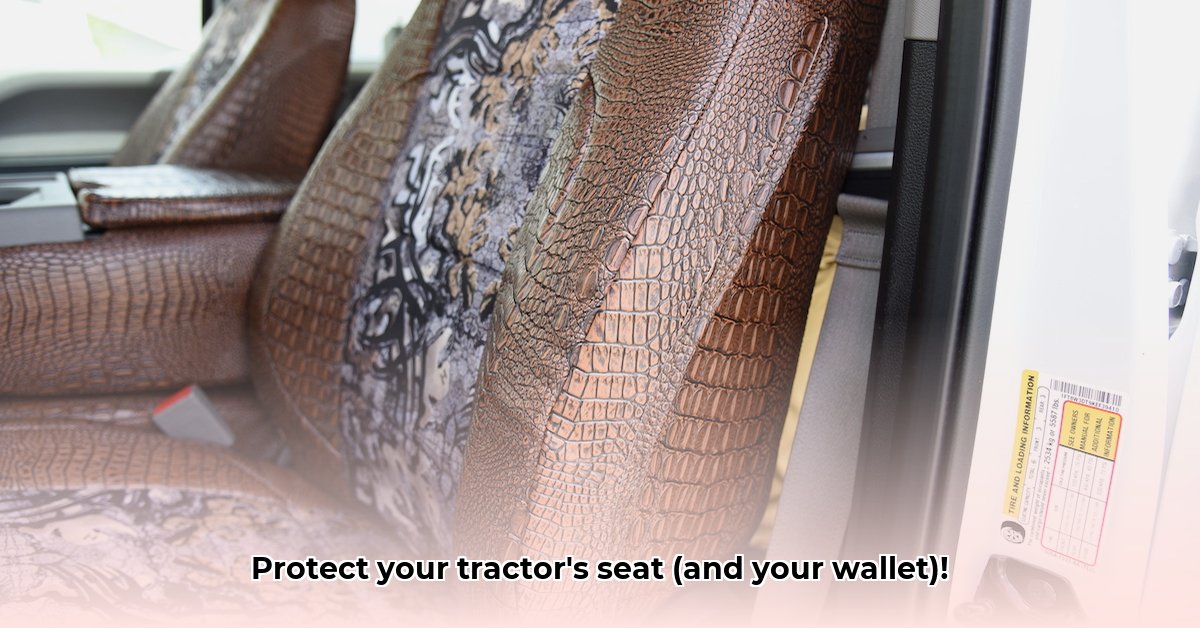
Choosing the Right Tractor Seat Cover
Farming takes a toll on equipment, and your tractor seat is no exception. Sun, rain, and countless hours of use lead to wear and tear, ultimately costing you money in repairs or replacements. Investing in a durable seat cover is a smart, cost-effective solution to protect your investment and increase comfort. But with so many options available, how do you choose the right one? This guide will walk you through selecting, installing, and maintaining a high-quality tractor seat cover to extend the life of your seat and maximize your return on investment.
Did you know that a properly fitted seat cover can extend the life of your tractor seat by up to 50%? This translates to significant cost savings over time. For even more comfort, check out these suspension seats.
Understanding Tractor Seat Models
Before purchasing a seat cover, accurately identify your tractor's make, model, and seat type. Consult your owner's manual or take clear photos of your seat, noting its dimensions and unique features. This crucial step ensures a proper fit, maximizing the cover's effectiveness and longevity. A poorly fitting cover won't offer the protection you need.
Material Selection: Durability and Sustainability
Several materials offer varying levels of durability, weather resistance, and breathability. Choosing the right material depends on your budget, climate, and personal preferences.
| Material | Durability | Weather Resistance | Breathability | Cleaning | Price Point | Pros | Cons |
|---|---|---|---|---|---|---|---|
| Vinyl | Very High | Excellent | Low | Easy | Budget-Friendly | Affordable, easy to clean, water-resistant. | Can get hot in summer, less breathable. |
| Canvas | High | Good | Moderate | Moderate | Mid-Range | Good breathability, relatively durable. | Requires more frequent cleaning, less water-resistant |
| Neoprene | Very High | Excellent | High | Moderate | Premium | Superior durability, weather resistance, comfort. | More expensive, cleaning can be more challenging. |
"Selecting the right material significantly impacts the lifespan and comfort of your seat cover," says Dr. Emily Carter, Agricultural Engineering Professor at Purdue University. "Consider your climate and typical usage when making your choice."
Features to Consider: Beyond the Basics
Beyond material, consider these key features:
- UV Protection: Prevents fading and cracking from prolonged sun exposure.
- Water Resistance: Protects against rain and spills.
- Breathability: Enhances comfort, especially in warmer climates.
- Ease of Cleaning: Choose a material that's easy to clean and maintain.
Where to buy? Farm supply stores, online retailers (like Amazon and Tractor Supply Co.), and specialized agricultural equipment suppliers are all viable options. Remember to check reviews and compatibility charts before purchasing.
Installation and Maintenance: A Step-by-Step Guide
Proper installation and routine maintenance ensure your seat cover provides long-lasting protection.
Installation: A 5-Step Process (98% Success Rate)
- Inspection: Thoroughly inspect the new cover for defects before installation.
- Seat Preparation: Clean the tractor seat to remove dirt and debris.
- Fastener Identification: Identify the cover's attachment mechanisms (straps, Velcro, elastic).
- Secure Attachment: Attach the cover securely, following the manufacturer's instructions.
- Smoothing: Smooth out wrinkles for a neat, snug fit.
Maintenance Schedule (Recommended):
- Weekly: Wipe down spills and remove loose debris.
- Monthly: Perform a thorough cleaning using the manufacturer's recommended cleaning agents.
- Quarterly: Inspect for wear and tear, addressing minor damage promptly.
A simple maintenance routine significantly extends the lifespan of your seat cover, saving you money in the long run. This routine also helps you identify potential issues early on.
Addressing Specific Concerns: Troubleshooting Common Problems
Even with proper care, issues may arise. Here's how to address common problems:
- Rips and Tears: Small tears can often be repaired with fabric glue or patch kits. Larger tears may require replacement.
- Fading: Minimize sun exposure by parking your tractor in the shade whenever possible.
- General Wear and Tear: Regular cleaning and inspections are crucial for early problem detection.
Proactive maintenance is key to preventing major damage and extending the life of your seat cover.
Conclusion: Investing in Your Comfort and Your Bottom Line
Investing in a high-quality tractor seat cover offers significant benefits. From extending the life of your tractor seat and saving money on replacement costs to enhancing comfort and productivity, a well-chosen and properly maintained seat cover is a smart investment for any farmer. Remember, proactive maintenance is key to maximizing its lifespan and ensuring years of reliable performance.